Governance
Corporate Governance
Basic approach
The Aichi Steel Group believes in the importance of realizing a sustainable society through business activities in order to achieve sustainable growth and improve mediumto long-term corporate value. Based on this belief, we work to enhance corporate governance so that we can manage our businesses with a high level of fairness, transparency, and efficiency in accordance with Our Vision, and build strong relationships with our shareholders, investors, customers, and all other stakeholders.
Initiatives for enhancing corporate governance
To sustainably increase our corporate value within a drastically changing business climate, we are striving to enhance our corporate governance based on the recognition that we need to anticipate change and address management issues with a sense of speed. We implement all of the principles of the Corporate Governance Code, which was revised in June 2021, and disclose details such as our sustainability initiatives and our constructive dialogues with shareholders and investors in our Corporate Governance Report. We also conduct management in a way that improves return on capital, including strengthening our intellectual and human capital and reviewing our portfolio.
Corporate governance structure
Aichi Steel uses an Audit & Supervisory Board member system, with a General Meeting of Shareholders, Board of Directors, Audit & Supervisory Board, and accounting auditors, to ensure the transparency and health of management. We also use a managing executive officer and executive officer system to reduce the number of directors, and improve the efficiency and speed of business execution. We enhance the function of the Board of Directors and improve its quality of management decision-making by ensuring at least one third of directors are independent outside directors. The Director Remuneration and Personnel Planning Committee is in charge of the nomination and remuneration of directors and managing executive officers. It enhances independence, objectivity, and transparency by considering and discussing these matters before consulting the Board of Directors. To conduct our operations, we have established in-house companies (four virtual companies built around our main businesses) and a Corporate Office (consisting of five headquarters that act as functional axes to support our business operations.) To strengthen compliance, particularly with regard to safety and quality, we have established the Risk Management Headquarters. The president of each in-house company and the headquarters general managers of the Corporate Office are responsible for executing operations as the chief officers. They are appointed by managing executive officers or executive officers, respectively, to support Aichi Steel's president from a companywide perspective.
Changes in corporate governance structure
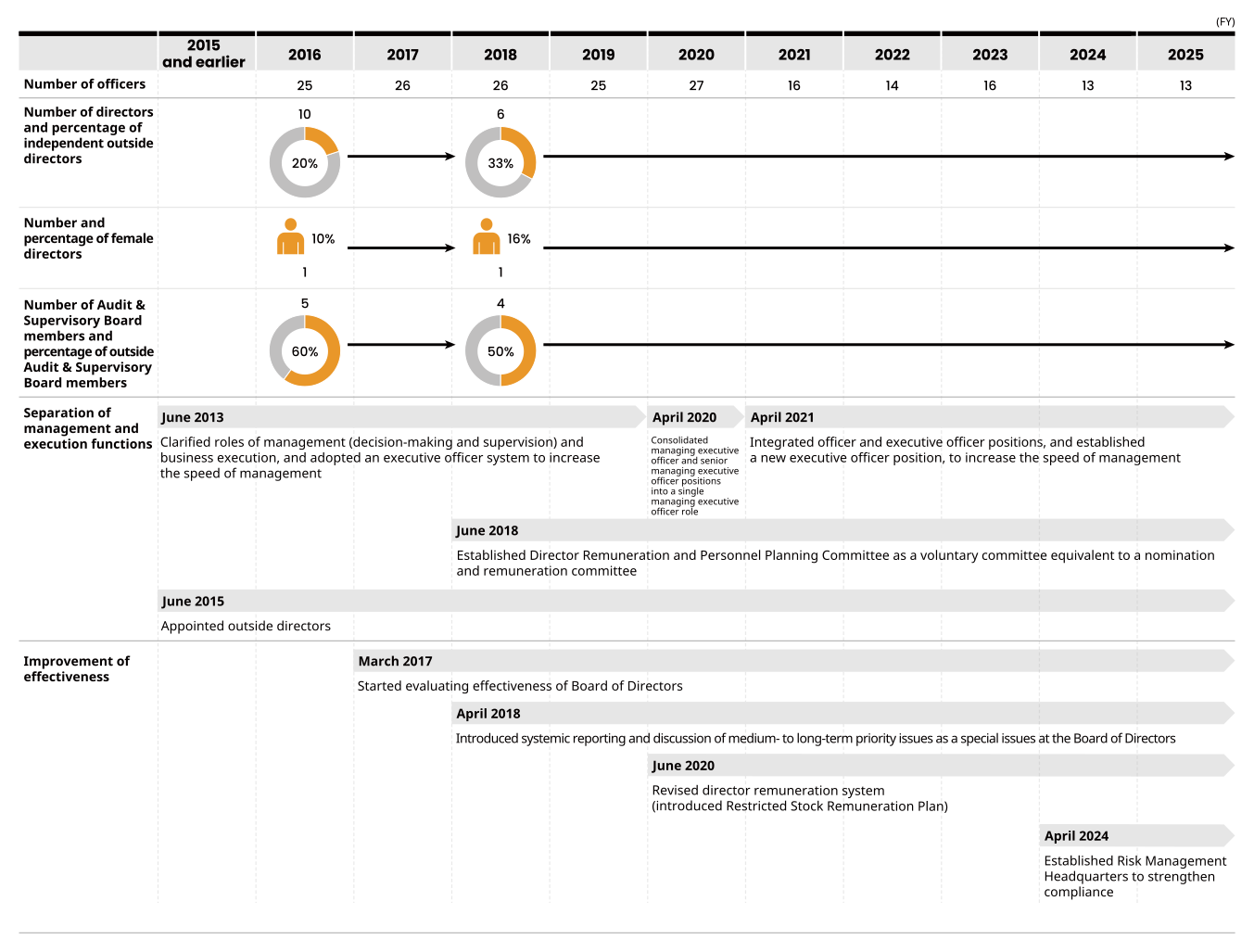
Board of Directors: Convened 15 times
The Board of Directors makes decisions concerning legal matters, and important matters for the management of Aichi Steel, and supervises business execution. Having one or more meetings a month, it comprises ten members in total; six directors (including two outside directors), two inside audit & supervisory board members, and two outside audit & supervisory board members. The two outside directors selected as independent officers meet the independence criteria set by securities exchanges. We have created support structures that enable our outside directors to adequately fulfill their management advisory and supervisory functions.
Main agenda items in FY2025 for the Board of Directors
| Topics | Main agenda items |
|---|---|
| Management and business strategy |
|
| Governance |
|
Audit & Supervisory Board: Convened 13 times
The Audit & Supervisory Board is made up of four Audit & Supervisory Board members, including two outside members. It audits the execution of duties of directors and other officers, as well as business and financial performance. In addition to attending meetings of the Board of Directors and other important meetings, Audit & Supervisory Board members coordinate with accounting auditors and departments in charge of internal audits to provide oversight of management.
Director Remuneration and Personnel Planning Committee: Convened 5 times
We have established a discretionary Director Remuneration and Personnel Planning Committee as an advisory body to the Board of Directors on matters related to nomination and remuneration of directors, managing executive officers, and other officers. Comprising two independent outside directors and one inside director, the committee is chaired by an independent outside director to ensure objectivity and transparency.
Main agenda items for the Director Remuneration and Personnel Planning Committee
| Topics | Agenda items |
|---|---|
| Officer remuneration |
|
| Officer nominations |
|
Organization chart
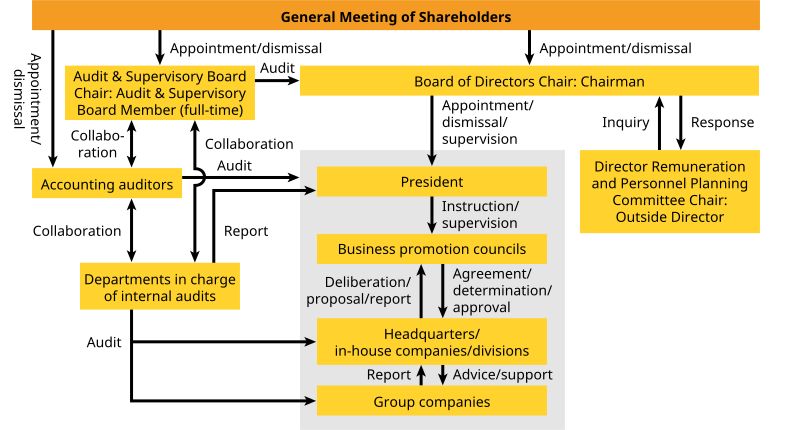
Approach to balance and diversity of board members and audit & supervisory board members
To enable accurate and prompt decision-making and appropriate risk management that delivers sustainable growth and improved medium- to long-term corporate value, our Board of Directors is composed of members with expertise in all business and function areas, and diverse knowledge, experience, and skills.
Procedure for appointment of Directors and Audit & Supervisory Board members
- The Director Remuneration and Personnel Planning Committee regularly and as required evaluates and carefully considers experience, knowledge, performance, and other factors, and then reports its nomination candidates to the Board of Directors.
- The Board of Directors makes tentative decisions on nomination candidates based on the reports of the above Committee, and then makes final decisions after discussions at the General Meeting of Shareholders, and after prior approval of the Audit & Supervisory Board in the case of nominations for Audit & Supervisory Board members.
Determining perspective and independence in appointment of outside officers
In appointing outside officers, we focus on whether they have sufficient qualities to contribute to the company's sustainable growth and the enhancement of our corporate value over the medium to long term. We take particular care to appoint those with management experience at other companies who can be expected to supervise the management of Aichi Steel.
The criteria for determining the independence of candidates for outside directors are based on a general consideration of factors such as career history, knowledge, and personality, with reference to the Enforcement Rules for Securities Listing Regulations provided by the Stock Exchange, etc.
Support structure for outside officers
To eliminate differences in access to information compared to internal officers and to maximize the performance of outside officers, we brief outside officers on agenda items before meetings, conduct onsite inspection tours, and create opportunities for free and open discussion outside of Board of Directors meetings on topics in addition to those matters subject to deliberation by and reporting to the Board. In addition to members of the Board of Directors, presidents and general managers related to the special topics also attend the meetings, where they can all participate in more profound discussions that include medium- to long-term strategies.
Key issues discussed in FY2025
- Progress on quality control system
- Review of growth strategies (for each company)
- Initiatives toward building a safety culture
- Capital and shareholder policies
- Consideration of governance reinforcement
- Measures to strengthen development capabilities
- Consideration of logistics policies
- Consideration of the next Medium-Term Management Plan
- Consideration of BCP initiatives
Succession plan
We recognize that cultivating the next generation of management is an important issue. We believe that we have secured a system in which the Director Remuneration and Personnel Planning Committee, a discretionary body, discusses and evaluates the qualities, development direction, and achievements of candidate personnel from an objective perspective, while also providing appropriate advice. Also, the president personally conducts training for the next generation of managers by meeting with managing executive officers and executive officers on a regular basis to discuss their individual goals and accomplishments.
Furthermore, we have focused on nurturing management personnel by targeting executive officers who are candidates for the next generation of management executives, introducing a support system in FY2024 for self-study to cultivate their organizational management and leadership skills.
Skill matrix for directors
Our skill matrix defines the experience and expertise that we consider necessary to achieve Vision 2030. The expertise and experience of directors and managing executive officers are shown below.
Skill matrix for directors
| Name | Position | Director Remuneration and Personnel Planning Committee | Corporate Management | Risk Management | Contribution to a sustainable global environment (E) | Creation of a prosperous society through business reform (S) | Employee happiness and company development (G) | Production & Quality | Sales & Procurement | Financial Affairs | Overseas | |||
|---|---|---|---|---|---|---|---|---|---|---|---|---|---|---|
| Environment | Energy | Technology & Development | IT & Digital | Legal Affairs and Compliance | Human Resource Development and Diversity | |||||||||
| Takahiro Fujioka | Chairman | ● | ● | ● | ● | ● | ● | ● | ● | ● | ||||
| Naohide Goto | President | ○ | ● | ● | ● | ● | ● | ● | ● | ● | ● | |||
| Motoshi Nakamura | Executive Vice President | ● | ● | ● | ● | ● | ● | ● | ||||||
| Naoki Ishii | Executive Vice President | ● | ● | ● | ● | ● | ● | ● | ||||||
| Koichi Yasui | Outside Director | ◎ | ● | ● | ● | ● | ● | ● | ● | ● | ● | |||
| Yuko Arai | Outside Director | ○ | ● | ● | ● | ● | ● | |||||||
- ◎: Chair ○: Constituent member
Evaluation of Board of Directors effectiveness
We evaluate the effectiveness of the Board of Directors every year to maintain and improve the effectiveness of our corporate governance. We interview and survey all members of the Board of Directors, analyze and evaluate their performance, and report effectiveness-related results, issues, and responses to the Board of Directors.
Our efforts and the results of our effectiveness evaluation are summarized below.
(1) Evaluation method
- In February, the Board of Directors Secretariat conducted both quantitative and qualitative evaluations through questionnaires and interviews with all Directors and Audit & Supervisory Board Members, including those from outside the company, as well as in-house company Presidents and General Managers attending as observers.
- Evaluation results and directions for addressing issues were compiled and reported to the Board of Directors meeting in March for discussion.
- From April, improvement activities were carried out to enhance effectiveness.
(2) Evaluation items
- Composition of the Board of Directors
- Effectiveness of supervisory functions
- Operations and deliberation activation
- Support systems for executives
(3) Summary of FY2025 evaluation results
- We created opportunities for discussion on key issues by outside directors to deepen their understanding of our corporate activities and encourage the active exchange of opinions. We worked on continuous improvement through annual planning in advance, increase in time and frequency, provision of opportunities for outside officers to provide information based on their own knowledge and experience, and on-site plant inspections. Board of Directors meeting times are also extended to achieve the above.
Based on these efforts and questionnaire results, we evaluate that our Board of Directors is fulfilling its functions of important management decision-making and supervision of business execution. - Outside directors requested additional information to facilitate discussions at Board of Director meetings, as an opportunity to improve the Board's operations and effectiveness.
- With regard to sustainability initiatives, opinions were expressed on the ongoing need to further deepen discussions and promote discourse on a wider range of topics beyond carbon neutrality and human rights.
(4) Main improvement measures
We work to improve the following issues to further ensure the effectiveness of the Board of Directors.
- Full discussion on sustainability initiatives
We organize required agenda items throughout the year and utilize opportunities to deliberate on key issues in order to systematically conduct discussions on growth strategies and sustainability. - Support for outside officers
In order to deepen their understanding of Aichi Steel and contribute to discussions at Board of Directors meetings, we will strengthen on-site inspections that can lead to company strategy and investment projects, and make improvements such as providing relevant information and creating opportunities to exchange opinions among internal and external officers.
Officer remuneration
Basic approach
- Remuneration for each director shall be in accordance with the roles and responsibilities required of him or her
- Remuneration shall be consistent with Aichi Steel business strategies and shall encourage directors to work toward sustainable improvement of corporate value
- Remuneration shall motivate officers to have an even greater sense of responsibility as a member of management and to promote management from the same perspective as shareholders
- Remuneration shall be set at a level that takes into account the business environment, market trends, and payment levels of other companies
- The remuneration system decision process shall be objective and highly transparent.
Decision process
Aichi Steel established the Director Remuneration and Personnel Planning Committee, with the chair being an independent outside director and the majority of members also being independent outside directors, to ensure objectivity, fairness, and transparency in decisions such as remuneration for directors. The committee discusses director remuneration structures, levels, decision-making policies and procedures, and individual levels of remuneration based on the decision-making policies. Based on the results of those discussions, the Board of Directors determines policies for director remuneration, individual levels of remuneration, and other matters. From the perspective of maintaining independence, remuneration for outside directors is at fixed rate. From next fiscal year onward, we will review our officer remuneration compensation system to better tackle social issues, by incorporating perspectives that reflect not only economic value but also social value such as environmental considerations (sustainability indicators).
Remuneration structure
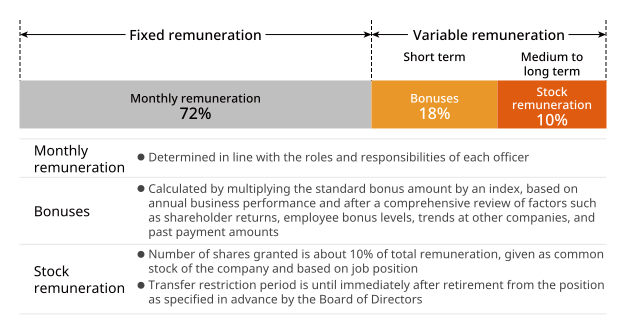
Remuneration and other payments to directors and Audit & Supervisory Board members
| Officer classification | Total remuneration (million yen) |
Total remuneration by type (million yen) | Number of applicable officers | ||
|---|---|---|---|---|---|
| Fixed | Fluctuation (short-term) |
Fluctuation (medium- to long-term) |
|||
| Monthly remuneration | Bonuses | Stock remuneration | |||
| Directors (excluding outside directors) | 310 | 220 | 62 | 27 | 4 |
| Audit & Supervisory Board Members (excluding outside members) | 64 | 64 | – | – | 2 |
| Outside officers | 40 | 40 | – | – | 5 |
-
- Performance-based remuneration includes bonus amounts determined by resolution at the meeting of the Board of Directors on May 14, 2026.
- Stock remuneration includes amounts related to restricted stock granted to directors (excluding outside directors) and expensed during the current fiscal year.
- The above includes directors and audit & supervisory board members who retired at the close of the 121th General Meeting of Shareholders held on June 18, 2025.
Cross Shareholdings
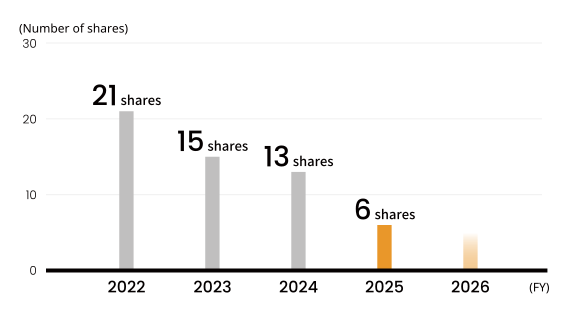
Maintaining and strengthening of trade and collaborative relationships with a range of companies are needed to ensure sustainable growth in a rapidly changing business environment. For this reason, Aichi Steel engages in cross holdings with other companies, but only if it deems them to be effective in improving corporate value from a medium- to long-term perspective in a comprehensive evaluation that considers its business strategy, future relationships with suppliers and affiliated companies, and other factors. As stated in the updated Medium-Term Management Plan released in February 2025, we will review the effectiveness of all holdings without exception and improve asset efficiency by selling those that do not demonstrate clear value.
Verification of cross shareholding suitability
Each year, at a meeting of the Board of Directors, we make comprehensive verifications and assessments of the suitability of each cross shareholding based on quantitative factors, including whether dividends, business profits, and other figures exceed our weighted average cost of capital, as well as qualitative factors, including trading status and business-level collaborations. If a shareholding is determined to be unsuitable according to the verification, we decide on what course of action to take, including disposing of the shares.
Criteria for exercising voting rights
Rather than applying uniform decisions from typical and short-term criteria, we make decisions on each agenda item separately. We consider them from various perspectives, including corporate value improvement and shareholder returns over the medium to long term, while fully respecting the management policy, business strategies, and other decisions of the companies in which we invest. When exercising our voting rights, we make comprehensive decisions on whether to approve agenda items after closely investigating factors such as business performance, governance, and capital policy that would represent a conflict of interest with us, or would change or dilute our shareholdings.
Changes in cross shareholdings (listed shares)
BCP (Business Continuity Plan)
Basic approach
The business environment is significantly changing and diversifying due to climate change, tension in international affairs, and other issues impacting business activities, as well as social instability caused by growing inequality. These social and environmental challenges are having a major impact on companies' value creation and business models. Faced with this situation, we have made risk management one of our top management priorities, and are working to minimize risks by enhancing and strengthening our controls. We classify potential impacts on business management as either “risks” (matters yet to materialize) or “crises” (emergencies that have materialized). We then focus on preventive measures that eliminate risks before they become crises, and on prompt and accurate initial and recovery responses that minimize damage in the event of a crisis occurring.
Specific initiatives
1. Reassessing major risks and studying
Having acquired IATF 16949* certification in FY2022, we have begun to reevaluate our major risks and to improve our response when disasters and other events occur, with the aim of strengthening our resilience to such events. As part of this effort, we began re-examining our company-wide business continuity plan (BCP) in FY2023. Assuming a situation in which operations are suspended for one month or more, we analyze and assess the specific impact on our business, then plan and implement necessary measures focusing on prevention, recovery, and alternative production.
- An international standard for quality management systems specialized for the automotive industry and used by many of the world's automakers as their global procurement standard for automotive parts
2. Disaster preparedness
(1) Earthquake in Kamchatka Peninsula
A massive earthquake of magnitude (Mw) 8.8 occurred off the Kamchatka Peninsula in Russia in July 2025, and tsunami warnings were issued for Japan's Pacific coastline.
Among our business sites, plants in Tokai City and Higashiura Town, which are in coastal area in Aichi Prefecture, were under tsunami advisories, but as a result of information collection after the earthquake, we determined that there was virtually no impact on the Company, and a companywide notice was issued that business operations would continue and that, as a precautionary measure, personnel should not approach wharfs until the advisory was lifted.
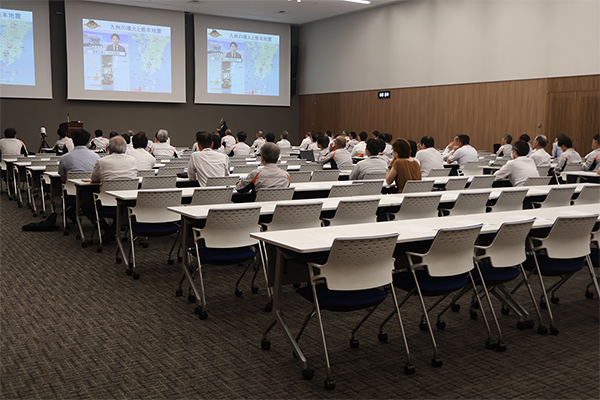
(2) Disaster preparedness lecture
Professor Emeritus Nobuo Fukuwa of Nagoya University was invited to give a disaster preparedness lecture on “Nankai Trough earthquake countermeasures and the Disaster Management Agency” in September 2025.
In the lecture, Professor Fukuwa made comments such as, “In the event of a Nankai Trough earthquake, the damage will be extensive and government assistance will not arrive in time. Each of you must consider how you will protect your lives and livelihoods” and “It is my hope that when rebuilding Japan after such an earthquake disaster, the Tokai region, a manufacturing stronghold with the Toyota Group at its center, will serve as a driving force.”
This disaster preparedness lecture was attended by a total of 382 persons including the president (64 attended in person and 318 attended online).
(3) Disaster drills
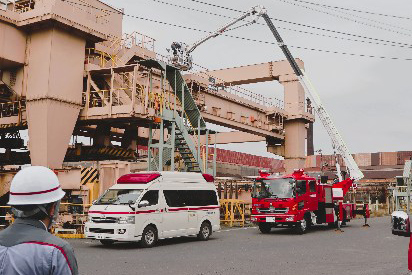
In December 2025, we conducted a joint disaster drill at the Chita Plant hosted by the Tokai City Coastal Industrial Zone Safety Liaison Committee, of which the Company is a member. The drill was intended to reinforce disaster preparedness arrangements between the Tokai City Fire Department and member companies in preparation for disaster such as earthquakes and fires in the coastal industrial zone.
Specifically, the drill included high-elevation rescue training using an articulating ladder truck from the fire department, sandbag stacking training by a committee response team to prevent fuel spills, and firefighting hose discharge training with both fire department and committee fire vehicles, confirming coordination among the relevant organizations.
Strengthening of risk response
In order to cope more swiftly with an increasingly uncertain and complex business environment, we are verifying the effectiveness of measures to address emerging risks. We are gathering information about possible future risks more extensively and on a more global level than in the past.
Our functional divisions used to take the lead in addressing risks, but from now on, we will strengthen cooperation with our business divisions so that we can recognize risks more accurately than ever before and develop mechanisms to respond to them appropriately. By continuing to strengthen our risk response capabilities and reduce loss when risks materialize, we are striving to sustainably improve corporate value. In response to the release of the “Nankai Trough Earthquake Impact Assessment Report (Revised Version)” in March 2025, we will examine additional measures such as (1) reducing direct damage, (2) prioritizing human life and safeguarding livelihoods, and (3) early recovery.
Compliance
Basic approach to compliance
Based on the recognition that compliance is the foundation of our corporate activities, we established the Aichi Steel Group Action Guidelines which we are working to spread and put into practice among all our officers and employees. In addition to laws and regulations, we also comply with social norms and decency, and internal company rules. To this end, we are constantly striving to raise awareness of compliance, meet society's expectations, and fulfill our social responsibilities as a company.
Promotion structure
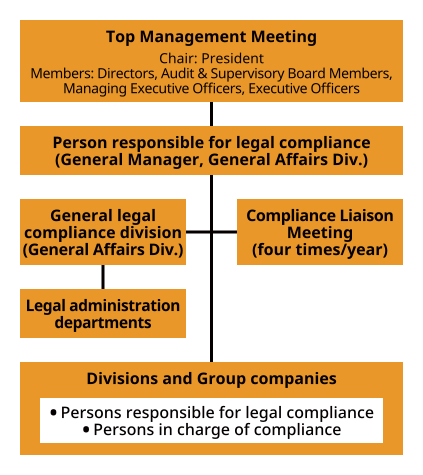
To maintain and strengthen compliance levels across the Group as a whole, we conduct progress reviews at the Top Management Meeting chaired by the president. This system enables us to share, with all employees, the determined initiative policies and activity plans via the persons in charge of compliance in each division and domestic group company, and to reflect them in activities being conducted in each workplace. Group companies engage in compliance activities by establishing promotion structures suited to their own size and circumstances. The Compliance Liaison Meeting also convenes four times a year to share things like revisions to laws and regulations and points of concern regarding legal compliance, and to promote Groupwide compliance activities.
Organization chart
Specific initiatives
Whistle-blowing system
We have established a whistle-blowing system to promote early detection of violations of laws and regulations, and misconduct, within the company and to self-govern through appropriate measures. Called the Aichi Steel Compliance Hotline, we have established three contact points operated by external legal representatives, internal Audit & Supervisory Board members, and the General Affairs Division. Reported information is shared among the three contact points, and appropriate measures are taken to ensure privacy protection and to prevent disadvantageous treatment. In FY2025, 24 cases were reported, all of which were investigated, verified, and dealt with in an appropriate and timely manner in cooperation with the relevant internal and external parties.
Information Security
Basic approach to information security
We possess important information assets, including information entrusted to us by our customers and suppliers, as well as trade secrets held by us. Amid recent advances in the networking of remote operations and plant equipment, it is our corporate responsibility to protect information assets from annually increasing cyber attacks and other threats, as well as information leaks, and to ensure a stable supply of products. We also recognize that this is an important management issue, and are committed to taking information security measures.
Promotion structure
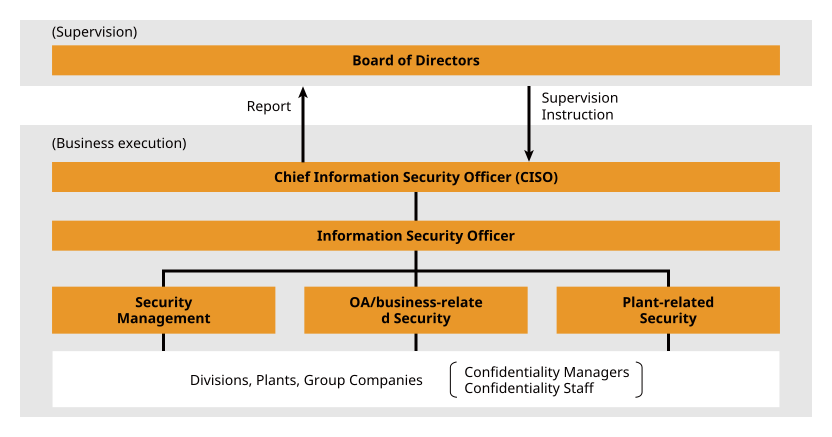
Based on automotive industry cybersecurity guidelines and led by a Chief Information Security Officer (CISO), we have established a system that enables us to maintain and improve our information security on a systematic and ongoing basis groupwide, while ensuring a uniform level of security globally. The CISO oversees our group's overall information security and information asset protection, and individual organizations are responsible for planning, promotion, auditing, and support. Twice a year, the Board of Directors receives progress, issue, and other reports from the CISO as part of its supervisory function.
Organization chart